SECRETS TO HELP YOU ASK YOUR MEDICAL HISTORY IN ENGLISH

BÍ QUYẾT GIÚP BẠN HỎI BỆNH SỬ BẰNG TIẾNG ANH nhanh chóng

HOW TO ASK MEDICAL HISTORY IN ENGLISH QUICKLY WHEN YOU DON’T HAVE MUCH TIME?

Do you always want to take a complete medical history to be able to make the most accurate diagnosis, but always feel like you don’t have enough time?

In Vietnam, when talking to patients in Vietnamese, you can ask It’s a little faster, but when speaking English, you feel like it takes a lot more time.

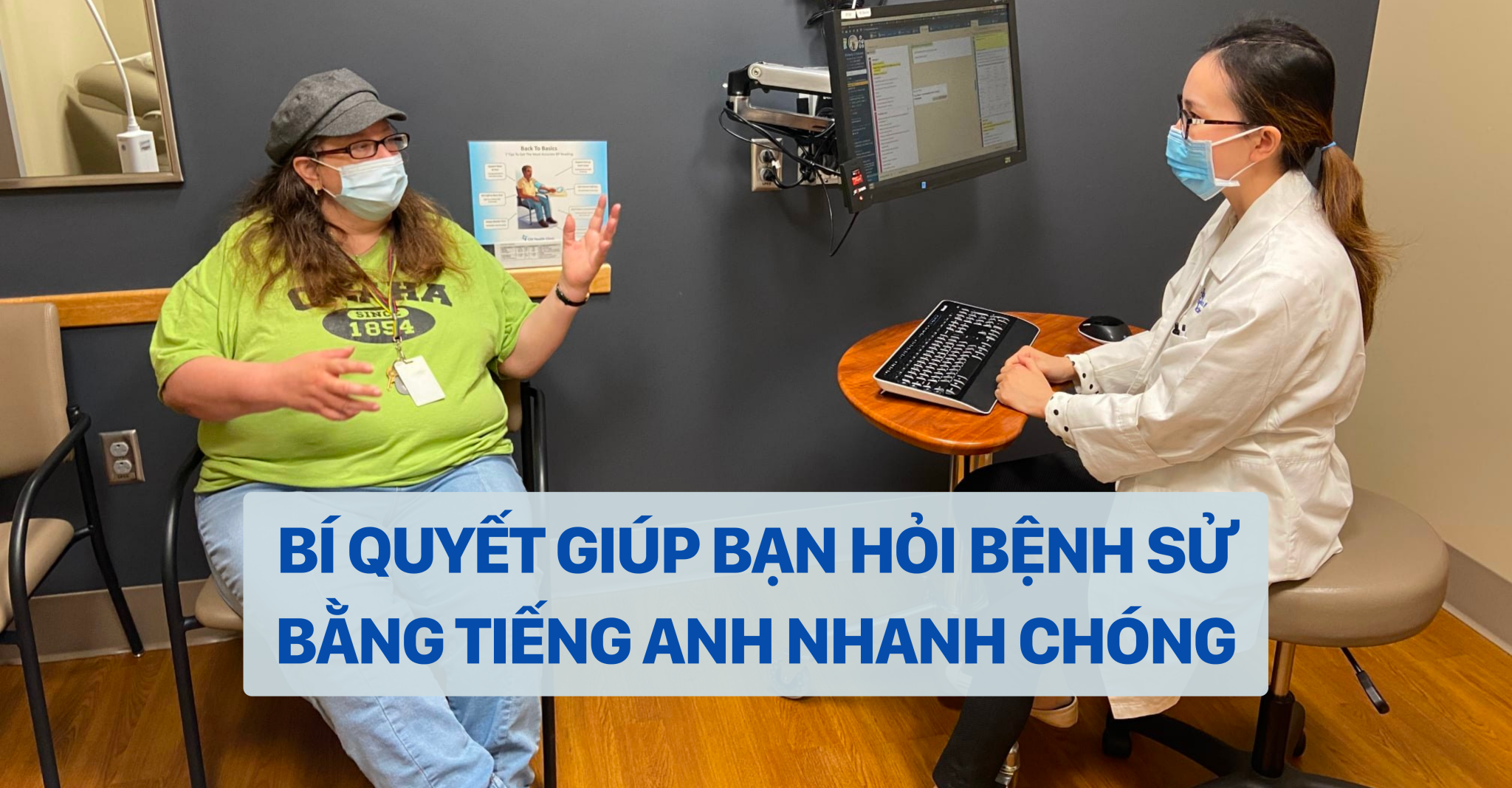
In addition, in the US or even at international clinics in Vietnam, many times patients speak languages other than English such as Spanish or French, and you also have to use an interpreter.

1. CONTEXT OF A VISIT

Imagine, you ask a question.
The interpreter speaks to the patient.

The patient answers.
The interpreter says it back to you.

Time doubles!

There are many patients, you can’t spend the whole session talking to just one patient.

So what should we do? what?

2. SECRETS TO QUICKLY TAKE DISEASE HISTORY

Today I will share with you a secret that will help you take a complete medical history while saving time and helping the patient feel satisfied with you.

This secret is to start the conversation with open-ended questions.

These questions will help the patient “SELF-DECLARING THE DISEASE” and you only need to listen.

Then if you still have questions about specific points, you can ask more closed questions (close-ended questions) for the patient to continue sharing.

For example, in the following example.

Situation A:

The patient comes in because of leg pain.

You Ask, “Where do you have leg pain?”

The patient says, “Here, doctor.”

You continue asking, “Since when have you had the pain?”

The patient says, “Since the day before yesterday”

You continue asking, “Why do you have the pain?”
The patient says, “I tripped on a rock and fell down, so it hurts.”

Change To do so, you should do the following:

The patient comes in because of leg pain.
You ask, “I saw the records say you came in because of leg pain. Can you tell me more about your leg pain?”

The patient says, “Thank you, doctor. The other day I accidentally tripped on a rock and fell down, so I have pain here. There’s swelling and bruising, doctor.” Doctor.”

In the second conversation, you not only save time and get information quickly, but the patient also feels much more comfortable with you.

Therefore, please try this method and let me know the results!

Please comment “yes” if the article is useful for you. you.

When you participate in the PATIENT COMMUNICATION MASTERY course taught by me, you will learn and practice effective communication with patients in English, to help you gain confidence when working with foreign patients.

If you are interested in the course, please Message Fanpage to receive advice.

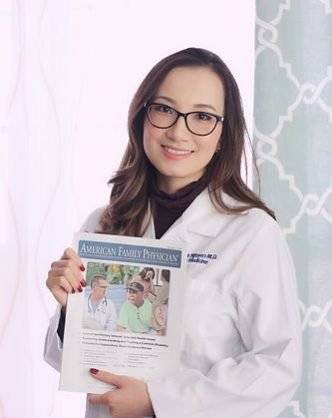
Dr. Christina Nguyen
The Phoenix Medical Academy

The Phoenix Medical Academy.
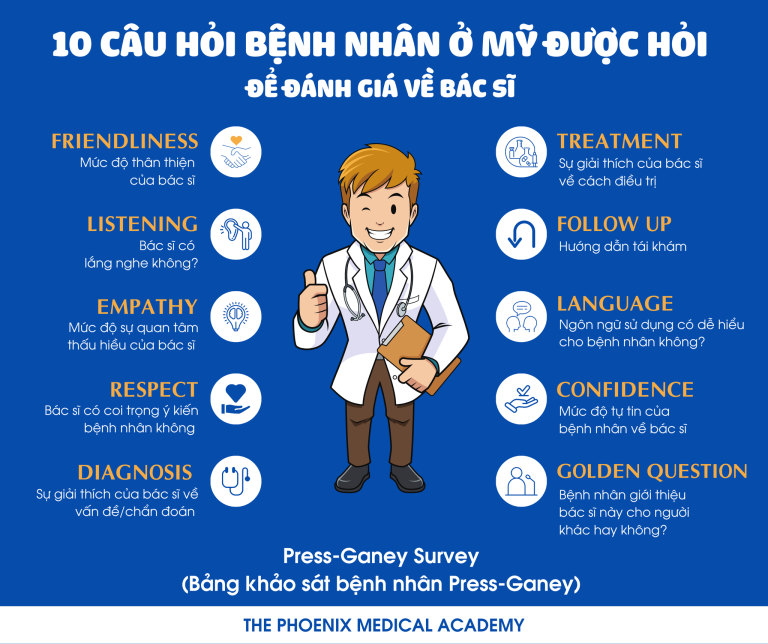
If you found this article meaningful, please share it with others!

BÍ QUYẾT GIÚP BẠN HỎI BỆNH SỬ BẰNG TIẾNG ANH nhanh chóng

HOW TO ASK MEDICAL HISTORY IN ENGLISH QUICKLY WHEN YOU DON’T HAVE MUCH TIME?

Do you always want to take a complete medical history to be able to make the most accurate diagnosis, but always feel like you don’t have enough time?

In Vietnam, when talking to patients in Vietnamese, you can ask It’s a little faster, but when speaking English, you feel like it takes a lot more time.

In addition, in the US or even at international clinics in Vietnam, many times patients speak languages other than English such as Spanish or French, and you also have to use an interpreter.

1. CONTEXT OF A VISIT

Imagine, you ask a question.
The interpreter speaks to the patient.

The patient answers.
The interpreter says it back to you.

Time doubles!

There are many patients, you can’t spend the whole session talking to just one patient.

So what should we do? what?

2. SECRETS TO QUICKLY TAKE DISEASE HISTORY

Today I will share with you a secret that will help you take a complete medical history while saving time and helping the patient feel satisfied with you.

This secret is to start the conversation with open-ended questions.

These questions will help the patient “SELF-DECLARING THE DISEASE” and you only need to listen.

Then if you still have questions about specific points, you can ask more closed questions (close-ended questions) for the patient to continue sharing.

For example, in the following example.

Situation A:

The patient comes in because of leg pain.

You Ask, “Where do you have leg pain?”

The patient says, “Here, doctor.”

You continue asking, “Since when have you had the pain?”

The patient says, “Since the day before yesterday”

You continue asking, “Why do you have the pain?”
The patient says, “I tripped on a rock and fell down, so it hurts.”

Change To do so, you should do the following:

The patient comes in because of leg pain.
You ask, “I saw the records say you came in because of leg pain. Can you tell me more about your leg pain?”

The patient says, “Thank you, doctor. The other day I accidentally tripped on a rock and fell down, so I have pain here. There’s swelling and bruising, doctor.” Doctor.”

In the second conversation, you not only save time and get information quickly, but the patient also feels much more comfortable with you.

Therefore, please try this method and let me know the results!

Please comment “yes” if the article is useful for you. you.

When you participate in the PATIENT COMMUNICATION MASTERY course taught by me, you will learn and practice effective communication with patients in English, to help you gain confidence when working with foreign patients.

If you are interested in the course, please Message Fanpage to receive advice.

Dr. Christina Nguyen
The Phoenix Medical Academy

The Phoenix Medical Academy.
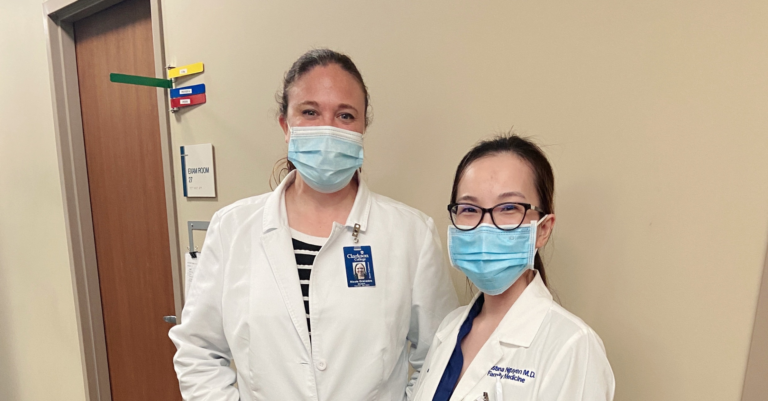
If you found this article meaningful, please share it with others!

BECOME A DOCTOR IN THE U.S.

Would you like to learn how to communicate with patients in English to U.S. medical standards, explore the mindset and skills needed to succeed in medicine in America, or learn more about life as a doctor in the U.S.?

BECOME A DOCTOR IN THE U.S.

Would you like to learn how to communicate with patients in English to U.S. medical standards, explore the mindset and skills needed to succeed in medicine in America, or learn more about life as a doctor in the U.S.?

If you found this article helpful, please share it with others!

Leave a Reply

 Dr. Christina Nguyen
Family Doctor in the U.S.

Years ago, when I sat down to write my application essay for the Bill Gates scholarship, I wrote about the dream of becoming a doctor who could help people across languages and cultures. That journey eventually led me to practice family medicine in the United States and to build The Phoenix Medical Academy — so students and immigrant families can find clearer guidance on studying medicine, residency, and life in America.

Get new posts by email