10 THINGS US PATIENTS APPRECIATE ABOUT DOCTORS

10 điều bệnh nhân mỹ đánh giá về bác sĩ NHỮNG ĐIỀU CẦN LƯU Ý KHI GIAO TIẾP VỚI BỆNH NHÂN MỸ

10 THINGS US PATIENTS EVALUATE ABOUT DOCTORS

Today in the US, patients often tend to have the notion that they go to the doctor to receive a “health care service” and that is why they want to get a service that makes them feel “good value for money” and satisfied.

1. DOCTOR-PATIENT RELATIONSHIP IN THE US

This concept may be different from the way patients in Vietnam think.

We are not talking about whether this concept is right or wrong, but if you want to be successful when working with American patients, this is an important thing to know to be able to adapt.

In fact, every time a patient comes home from a doctor’s appointment or hospital stay, they will receive surveys sent via text message or email or mail home. for patients to evaluate the quality of the doctor’s service as well as that of the clinic and hospital.

This is a common way of working in most major medical organizations in the US.

In addition, patients can also go to the clinic’s website, google review, yelp, and other websites to leave comments and reviews for the doctor.

2. EVALUATION CRITERIA

So by what criteria will patients evaluate doctors?

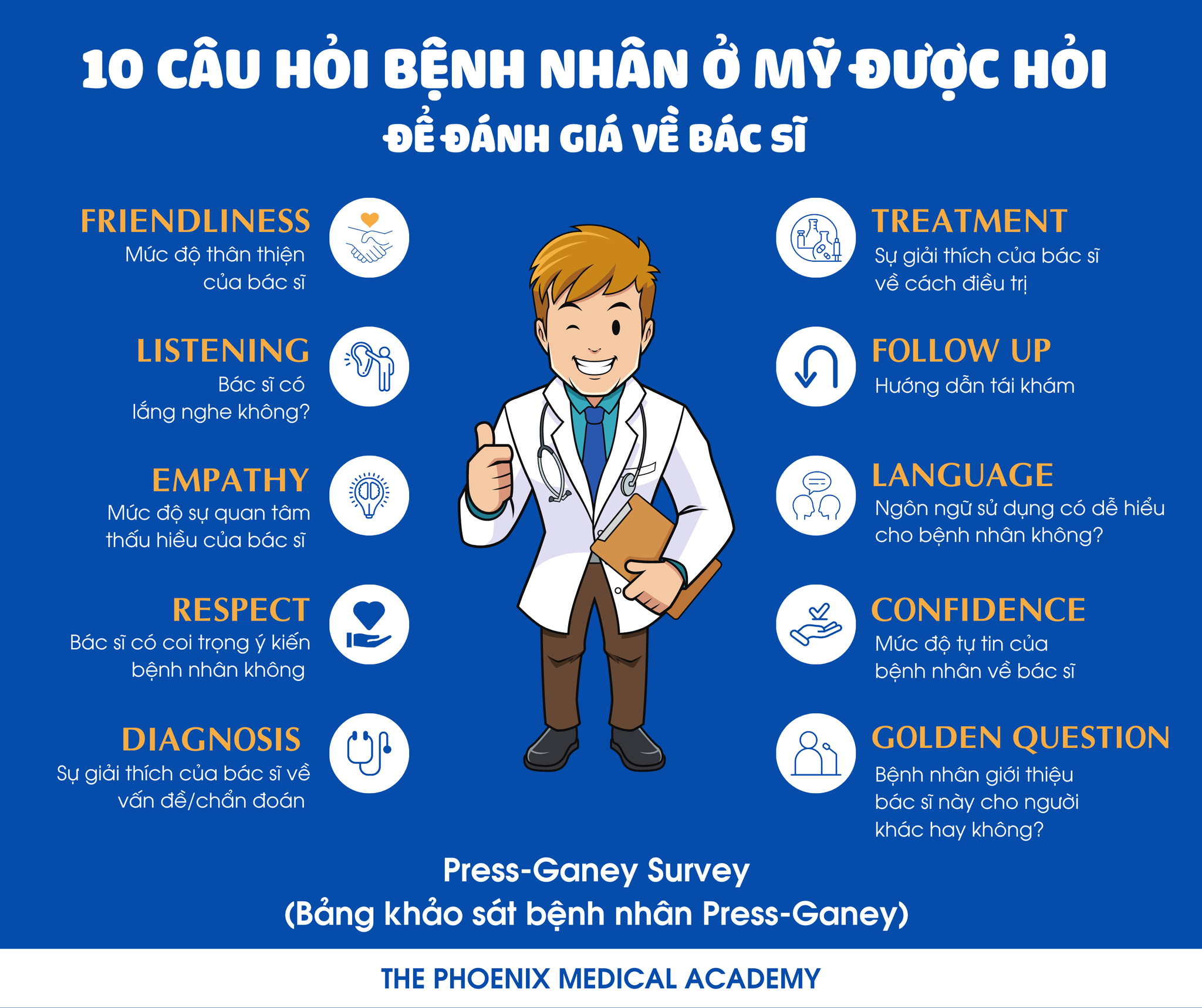
Most surveys will usePress-Ganey.

Below are 10 categories that patients are asked when evaluating doctors.

  1. Patients’ perception of the doctor’s friendliness
  2. Do patients feel that the doctor is listening? or not?
  3. Does the patient feel that the doctor cares?
  4. Does the patient feel that the doctor values the patient’s opinion?
  5. Does the doctor explain the problem the patient is experiencing clearly and easily?
  6. Is the language the doctor uses easy for the patient to understand?
  7. What is the patient’s level of confidence in the doctor?
  8. Would the patient recommend this doctor to others?

3. CONCLUSION

You see, all 10 of these questions are subjective because they are the patient’s perception of the doctor.

Therefore, to be successful in the medical environment in America, being good at the profession is not enough. You also need to communicate effectively with patients.

It may be that you care and respect your patients, but if you can’t help them feel that, you still won’t build a good relationship with them.

If you feel awkward while communicating with American patients and want to gain confidence when communicating with patients in English, leave a message to receive advice. question.

Please comment “yes” if the article is useful to you.

Dr. Christina Nguyen
~ The Phoenix Medical Academy
If you found this article meaningful, please share it with others!

10 điều bệnh nhân mỹ đánh giá về bác sĩ NHỮNG ĐIỀU CẦN LƯU Ý KHI GIAO TIẾP VỚI BỆNH NHÂN MỸ

10 THINGS US PATIENTS EVALUATE ABOUT DOCTORS

Today in the US, patients often tend to have the notion that they go to the doctor to receive a “health care service” and that is why they want to get a service that makes them feel “good value for money” and satisfied.

1. DOCTOR-PATIENT RELATIONSHIP IN THE US

This concept may be different from the way patients in Vietnam think.

We are not talking about whether this concept is right or wrong, but if you want to be successful when working with American patients, this is an important thing to know to be able to adapt.

In fact, every time a patient comes home from a doctor’s appointment or hospital stay, they will receive surveys sent via text message or email or mail home. for patients to evaluate the quality of the doctor’s service as well as that of the clinic and hospital.

This is a common way of working in most major medical organizations in the US.

In addition, patients can also go to the clinic’s website, google review, yelp, and other websites to leave comments and reviews for the doctor.

2. EVALUATION CRITERIA

So by what criteria will patients evaluate doctors?

Most surveys will usePress-Ganey.

Below are 10 categories that patients are asked when evaluating doctors.

  1. Patients’ perception of the doctor’s friendliness
  2. Do patients feel that the doctor is listening? or not?
  3. Does the patient feel that the doctor cares?
  4. Does the patient feel that the doctor values the patient’s opinion?
  5. Does the doctor explain the problem the patient is experiencing clearly and easily?
  6. Is the language the doctor uses easy for the patient to understand?
  7. What is the patient’s level of confidence in the doctor?
  8. Would the patient recommend this doctor to others?

3. CONCLUSION

You see, all 10 of these questions are subjective because they are the patient’s perception of the doctor.

Therefore, to be successful in the medical environment in America, being good at the profession is not enough. You also need to communicate effectively with patients.

It may be that you care and respect your patients, but if you can’t help them feel that, you still won’t build a good relationship with them.

If you feel awkward while communicating with American patients and want to gain confidence when communicating with patients in English, leave a message to receive advice. question.

Please comment “yes” if the article is useful to you.

Dr. Christina Nguyen
~ The Phoenix Medical Academy

If you found this article meaningful, please share it with others!

BECOME A DOCTOR IN THE U.S.

Would you like to learn how to communicate with patients in English to U.S. medical standards, explore the mindset and skills needed to succeed in medicine in America, or learn more about life as a doctor in the U.S.?

BECOME A DOCTOR IN THE U.S.

Would you like to learn how to communicate with patients in English to U.S. medical standards, explore the mindset and skills needed to succeed in medicine in America, or learn more about life as a doctor in the U.S.?

If you found this article helpful, please share it with others!

Leave a Reply

 Dr. Christina Nguyen
Family Doctor in the U.S.

Years ago, when I sat down to write my application essay for the Bill Gates scholarship, I wrote about the dream of becoming a doctor who could help people across languages and cultures. That journey eventually led me to practice family medicine in the United States and to build The Phoenix Medical Academy — so students and immigrant families can find clearer guidance on studying medicine, residency, and life in America.

Get new posts by email