This is probably the question I have received the most in recent years. Test
“Studying too long.”
“Tuition debt.”
“Burnout.”
“AI is about to replace doctors.”
“Residency is increasingly competitive.”
If you just read the news or surf social networks, it is easy to feel that The medical industry is becoming an investment that is no longer worth it.
However, reality is pointing to the opposite.
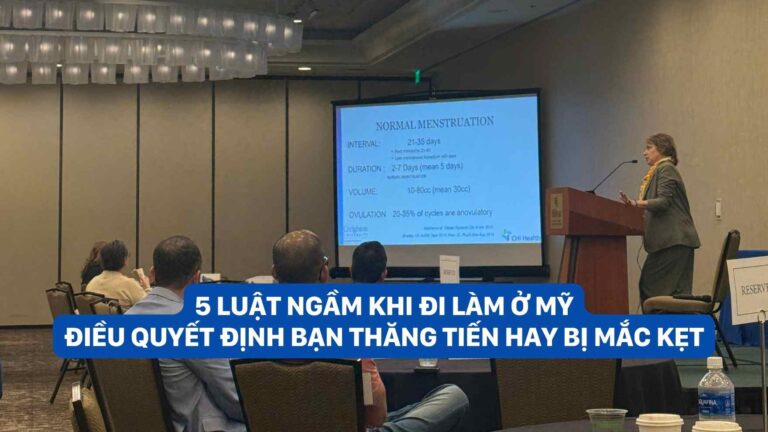
Last week, I had the opportunity to attend a sharing session about the development orientation of the University of Nebraska Medical Center (UNMC) led by Dr. Presented by H. Dele Davies.
Dr. Davies is currently the ninth Chancellor of UNMC – University of Nebraska Medical Center (UNMC) – Nebraska’s leading academic medical center, including the School of Medicine, School of Nursing, School of Pharmacy, School of Dentistry, School of Public Health and many other health workforce training programs.
This is also the place that trains the most medical professionals in the state of Nebraska, and is one of the major health care and research centers of the Midwest region of the United States.
What impressed me most in the talk that day was not AI.
It was not the research either.
Which is the number 1 priority in UNMC’s entire strategy – Prepare Nebraska’s Health Workforce – meaning preparing health human resources for Nebraska.
On the first slide, Dr. Davies said it clearly: “Project Health will expand our ability to train health professionals in Nebraska.”
In other words, their biggest goal is to train more medical personnel for the state of Nebraska.
And I think this reflects a real story of the whole United States – America is lacking doctors (and medical staff).
According to the latest report from the Association of American Medical Colleges (AAMC), by 2036, the United States could be short of 13,500 to 86,000 doctors.
The Primary Care group alone may lack from 20,200 to 40,400 doctors.
Why?
Because three trends are happening at the same time.
* The US population continues to grow.
* There are more and more people over 65 years old, leading to a sharp increase in health care demand.
* Meanwhile, a very large part of the current physician workforce is approaching retirement age.
To put it more simply… The demand for medical examination and treatment is growing faster than the ability to train new doctors.
When a country lacks human resources, the whole system will change.
In the presentation, Dr. Davies doesn’t just talk about the problem, he talks about what the system is doing to solve it.
– Training more people.
– Expanding training capacity.
– Investing in facilities.
– Developing new programs.
That is also the reason why “Prepare Nebraska’s Health Workforce” is placed as the number one priority in UNMC’s strategy.
– If lack of human resources is a problem of the whole society…
– Then the solution must also come from the whole system.
– From the government.
– From universities.
– From hospitals.
– And from training organizations.
What about AI?
This is probably what worries many young people the most.
But what’s interesting is that UNMC’s AI strategy is very different from what we usually see online.
Slides by Dr. Davies clearly stated: “Our goal is to build AI literacy across UNMC while keeping people, ethics and our mission at the center.”
AI will be used to:
* Train students and faculty to use AI responsibly;
* Advance research;
* Improve clinical workflows;
* Reduce repetitive administrative tasks.
The ultimate goal is not to replace doctors.
It is to let doctors, nurses and medical staff have more time to spend with patients.
In my opinion, that is the realistic view of AI in healthcare.
In addition, the system also recognizes that “burnout” is real.
Another slide introduces the Better Processes Initiative.
The goal is clear: Reduce unnecessary complexity, improve job satisfaction, and help employees focus on the most important tasks.
This shows that universities and medical systems do not deny the pressure of the medical profession.
On the contrary, they are proactively changing processes to reduce burdens that do not create value.
What about international doctors (IMG)?
In the last few years, ECFMG has moved to the MyIntealth platform, modernizing and digitizing the process of verifying records, managing certificates and tracking the training process of international doctors.
The initial transition was not without technical difficulties.
But the general trend is clear.
The system is being modernized to serve the training and management of the future medical workforce.
At the same time, many US states are also considering or implementing policies to better utilize international physician human resources to address the shortage of medical manpower.
That doesn’t mean the path becomes easier.
– USMLE is still difficult.
– Residency is still competitive.
– Standards are still very high.
– But the direction of the whole system The system is showing one thing:
So is medicine in the US still worth pursuing?
In my opinion… yes
Not because this path is easy.
But because the social demand for this profession is still very large.
If an industry is both difficult to enter…
…and has no demand…
then it is a risky investment.
But if an industry is very difficult to get into…
…and the whole country is investing billions of dollars to train more people because there aren’t enough people to do it…
then that’s a completely different story.
In particular, after listening to UNMC’s development strategy and looking at the doctor shortage data across the United States, I am even more convinced that:
This is not a bad time to pursue a medical career in the US.
Perhaps, this is one of the times when society needs people working in this profession the most.
What do you think about these shares? Please comment to let me know.
Please share if you find it useful!
Dr. Christina Nguyen
Phoenix Medical Academy