3 THINGS DOCTORS NEED TO KNOW TO BE SUCCESSFUL IN MEDICAL PROFESSION

DR CHRISTINA NGUYỄN NHỮNG ĐIỀU BÁC SĨ CẦN BIẾT ĐỂ THÀNH CÔNG TRONG NGHỀ Y

WHAT DOCTORS NEED TO KNOW TO SUCCEED IN THE MEDICAL PROFESSION

1. 80/20 RULE

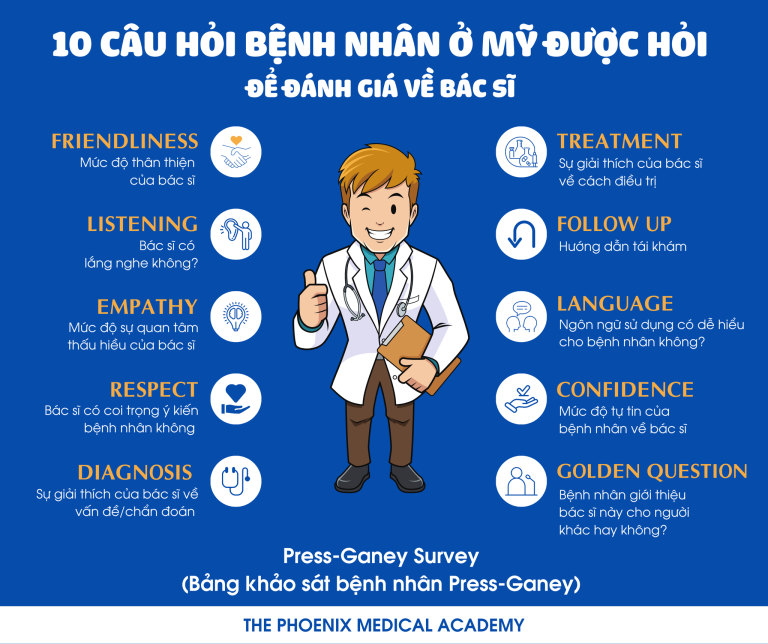
There is a rule that I always use in my visits with patients, which is the 80/20 rule – 80% LISTENING and 20% SPEAKING.

Depending on the reason the patient comes in for examination that day, this ratio can change (70-30 or 60-40), but this The important thing is to LISTEN MORE THAN SPEAKING.

In all patient surveys in the US, the reason why many patients love their doctors is “The doctor listens” and the reason why many patients dislike a certain doctor the most is “The doctor doesn’t listen.” listen.”

Therefore, to gain the trust and love of patients, the most important skill to practice is ACTIVE LISTENING – MASTER LISTENING ACTIVE.

In addition, when listening, we also understand the patient’s real problems and desires more quickly, and from there get accurate and appropriate diagnosis and treatment.

2. MANAGE PERSONAL EMOTION

As doctors, it is inevitable that we will encounter difficult, or seemingly “unreasonable” patients. They may say things that make us feel self-conscious and personally attacked. It can also be an angry, uncooperative attitude. At these times, the most important thing is to manage personal emotions, not letting external factors affect our insight and behavior.  Actually, this is easier said than done, and requires a great deal of bravery. I myself am also practicing every day to train myself to be better and better. One thing that is helpful for me at this time is to remember that “It’s not about me” which means “The patient is not like that because of me.” Indeed, there are cases where the patient is in pain, uncomfortable, worried, scared, or angry, so they have such words, attitudes, and actions. In these cases, patients need help. And we as doctors need to help patients clearly see the problems and help them solve those problems in a peaceful and professional manner.

3. WHITE SHIRT COLOR

For me, the color of a doctor’s white coat has a special meaning. White represents my neutral state of mind and emotions when preparing to talk to a patient.

When I listen to the patient’s story, my shirt will change color to match the patient’s color.

I happily congratulate the patient when they achieve their goal – losing a few kg, Hgb A1c number reduced to reach the goal pepper.

I sympathize and share the sadness and worries of patients when they are experiencing stressful problems in life.

And after stepping out of the room, I have to do one thing and that is to change the shirt color back to white, to keep myself in a ready state of mind. accept for the next patient, so as not to carry the patient’s emotions to another patient.

Not only that,  as a doctor, I am also a human being, and also have my own life outside of work, with worries, insecurities, or personal emotions.

But I always keep in mind that I must not bring personal colors into the patient. You must keep your “white shirt” to avoid affecting the patient.

Please comment “yes” if this article is useful to you.

Dr. Christina Nguyen

The Phoenix Medical Academy

If you found this article meaningful, please share it with others!

DR CHRISTINA NGUYỄN NHỮNG ĐIỀU BÁC SĨ CẦN BIẾT ĐỂ THÀNH CÔNG TRONG NGHỀ Y

WHAT DOCTORS NEED TO KNOW TO SUCCEED IN THE MEDICAL PROFESSION

1. 80/20 RULE

There is a rule that I always use in my visits with patients, which is the 80/20 rule – 80% LISTENING and 20% SPEAKING.

Depending on the reason the patient comes in for examination that day, this ratio can change (70-30 or 60-40), but this The important thing is to LISTEN MORE THAN SPEAKING.

In all patient surveys in the US, the reason why many patients love their doctors is “The doctor listens” and the reason why many patients dislike a certain doctor the most is “The doctor doesn’t listen.” listen.”

Therefore, to gain the trust and love of patients, the most important skill to practice is ACTIVE LISTENING – MASTER LISTENING ACTIVE.

In addition, when listening, we also understand the patient’s real problems and desires more quickly, and from there get accurate and appropriate diagnosis and treatment.

2. MANAGE PERSONAL EMOTION

As doctors, it is inevitable that we will encounter difficult, or seemingly “unreasonable” patients. They may say things that make us feel self-conscious and personally attacked. It can also be an angry, uncooperative attitude. At these times, the most important thing is to manage personal emotions, not letting external factors affect our insight and behavior.  Actually, this is easier said than done, and requires a great deal of bravery. I myself am also practicing every day to train myself to be better and better. One thing that is helpful for me at this time is to remember that “It’s not about me” which means “The patient is not like that because of me.” Indeed, there are cases where the patient is in pain, uncomfortable, worried, scared, or angry, so they have such words, attitudes, and actions. In these cases, patients need help. And we as doctors need to help patients clearly see the problems and help them solve those problems in a peaceful and professional manner.

3. WHITE SHIRT COLOR

For me, the color of a doctor’s white coat has a special meaning. White represents my neutral state of mind and emotions when preparing to talk to a patient.

When I listen to the patient’s story, my shirt will change color to match the patient’s color.

I happily congratulate the patient when they achieve their goal – losing a few kg, Hgb A1c number reduced to reach the goal pepper.

I sympathize and share the sadness and worries of patients when they are experiencing stressful problems in life.

And after stepping out of the room, I have to do one thing and that is to change the shirt color back to white, to keep myself in a ready state of mind. accept for the next patient, so as not to carry the patient’s emotions to another patient.

Not only that,  as a doctor, I am also a human being, and also have my own life outside of work, with worries, insecurities, or personal emotions.

But I always keep in mind that I must not bring personal colors into the patient. You must keep your “white shirt” to avoid affecting the patient.

Please comment “yes” if this article is useful to you.

Dr. Christina Nguyen

The Phoenix Medical Academy
If you found this article meaningful, please share it with others!

BECOME A DOCTOR IN THE U.S.

Would you like to learn how to communicate with patients in English to U.S. medical standards, explore the mindset and skills needed to succeed in medicine in America, or learn more about life as a doctor in the U.S.?

BECOME A DOCTOR IN THE U.S.

Would you like to learn how to communicate with patients in English to U.S. medical standards, explore the mindset and skills needed to succeed in medicine in America, or learn more about life as a doctor in the U.S.?

If you found this article helpful, please share it with others!

Leave a Reply

 Dr. Christina Nguyen
Family Doctor in the U.S.

Years ago, when I sat down to write my application essay for the Bill Gates scholarship, I wrote about the dream of becoming a doctor who could help people across languages and cultures. That journey eventually led me to practice family medicine in the United States and to build The Phoenix Medical Academy — so students and immigrant families can find clearer guidance on studying medicine, residency, and life in America.

Get new posts by email