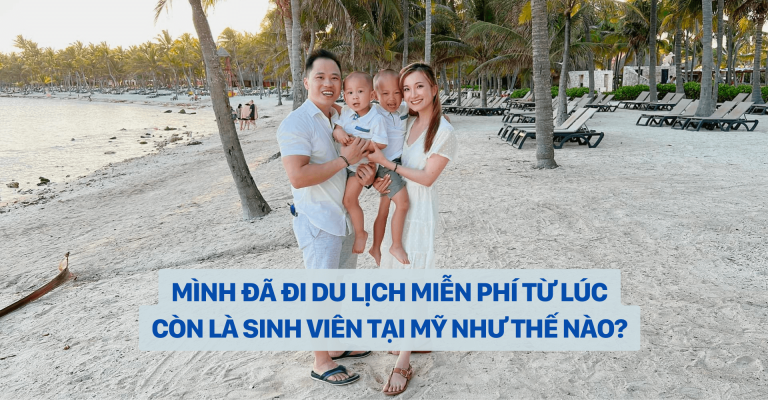
This is a question that almost all IMGs pursuing the USMLE and American Medical residency path are concerned about. That’s why today I will have an article explaining in detail about sponsoring your family to come to the US after you have become a resident doctor, along with necessary information about the process and related benefits of the sponsored person.
To briefly answer, after being matched to a residency training program, you can absolutely apply to bring your family. to America.
However, the specific sponsorship process will be slightly different depending on the type of visa you are sponsored by the boarding program (mostly J-1 visa or H-1B visa).
1. Sponsor your family with a J-1 visa
If you are sponsored for a J-1 Visa, you can sponsor your family to come to the US as a J-2 visa (dependent visa).
Who can be sponsored: Legal spouse and unmarried children under 21 years of age.
When can the family sponsorship application be processed: After you receive the DS-2019 form for the J-1 visa from ECFMG, you can immediately apply for the J-2 DS-2019 for your spouse and children.
Benefits of the guaranteed person:
Legal residence in the US: The J-2 visa holder is allowed to live with you in the US for the duration of your J-1 visa.
Study: They can register to study at educational institutions in the US without needing to change visa status.
Employment (conditional): J-2 visa holders can apply for an Employment Authorization Document (EAD). The application for this document can take from 3-6 months.
How long does it take to get a J2 visa: The time from application to completion ranges from 2-8 weeks.
Restrictions:
J-1 visa dependent: J-2 visa status is tied to your J-1 visa. If you complete the residency program and must return to your home country within 2 years (according to the “two-year home-country physical presence requirement” of the J-1 visa), your family must also leave the US.
Visa Conversion: If you are exempt from the return requirement (e.g., through the Conrad 30 program, working in a medical workforce shortage area), your spouse or children holding a J-2 visa cannot convert to an H-1B visa until when you complete your work obligation (usually 3 years) in the designated area.
2. Sponsor family with H-1B visa
If you are sponsored for an H-1B Visa, you can sponsor your family as an H-4 visa (dependent visa).
Who can be sponsored: Legal spouse and single children under 21 years old.
When can a family sponsorship application be processed: After your H-1B visa application is approved and you receive the I-797, you can immediately apply for an H4 visa for your spouse and children.
Benefits of the guaranteed:
Legal residence in the US: The H-4 visa holder is allowed to live with you in the US for the duration of your H-1B visa.
Study: They can study at schools in the US without needing to change visa status.
Work (conditional): In some cases, a spouse holding an H-4 visa may apply for an EAD to work if:
You (H-1B visa holder) are in the process of applying for a green card (meeting conditions such as I-140 approval or H-1B extension after 6 years).
How long does it take to get a visa? H4: Time from application to completion ranges from 2- 8 weeks.
Restrictions:
H-1B visa dependent: If your H-1B visa expires, is canceled, or you leave the US, the family holding the H-4 visa must also leave.
Work restrictions: When your family has an H4 visa, it is different from a J2 in that your family cannot legally work in the US unless you are in the process of applying for a green card – usually after graduating from residency.
Conversion from J-1 to H-1B visa: If you are exempt from the return requirement (for example, through the Conrad 30 program or similar programs), you can apply for an H-1B visa. After that, your family can switch from a J-2 to an H-4 visa.
Apply for a green card (Permanent Resident): After having an H-1B visa, you can apply for a green card through the EB-2 program. At this time, you and your family will be able to apply for green cards at the same time.
After you have obtained your green card, taken the citizenship test and become a US citizen, you can sponsor not only your spouse and children but also parents and siblings to The US follows many different sponsorships.
In short, settling in the US and sponsoring a family to come to the US when becoming a resident doctor is completely feasible, and has been successfully done by many IMGs doctors from all over the world (including Vietnam).
Of course the process will have certain requirements and procedures, but as long as you follow the instructions correctly, you can completely do it. In addition, you can also contact an immigration lawyer for assistance in the application process to ensure that the application is processed most accurately.
I hope this article is somewhat useful for you on your journey to conquer your dream of becoming a doctor in the US with your family.
This is a question that almost all IMGs pursuing the USMLE and American Medical residency path are concerned about. That’s why today I will have an article explaining in detail about sponsoring your family to come to the US after you have become a resident doctor, along with necessary information about the process and related benefits of the sponsored person.
To briefly answer, after being matched to a residency training program, you can absolutely apply to bring your family. to America.
However, the specific sponsorship process will be slightly different depending on the type of visa you are sponsored by the boarding program (mostly J-1 visa or H-1B visa).
1. Sponsor your family with a J-1 visa
If you are sponsored for a J-1 Visa, you can sponsor your family to come to the US as a J-2 visa (dependent visa).
Who can be sponsored: Legal spouse and unmarried children under 21 years of age.
When can the family sponsorship application be processed: After you receive the DS-2019 form for the J-1 visa from ECFMG, you can immediately apply for the J-2 DS-2019 for your spouse and children.
Benefits of the guaranteed person:
Legal residence in the US: The J-2 visa holder is allowed to live with you in the US for the duration of your J-1 visa.
Study: They can register to study at educational institutions in the US without needing to change visa status.
Employment (conditional): J-2 visa holders can apply for an Employment Authorization Document (EAD). The application for this document can take from 3-6 months.
How long does it take to get a J2 visa: The time from application to completion ranges from 2-8 weeks.
Restrictions:
J-1 visa dependent: J-2 visa status is tied to your J-1 visa. If you complete the residency program and must return to your home country within 2 years (according to the “two-year home-country physical presence requirement” of the J-1 visa), your family must also leave the US.
Visa Conversion: If you are exempt from the return requirement (e.g., through the Conrad 30 program, working in a medical workforce shortage area), your spouse or children holding a J-2 visa cannot convert to an H-1B visa until when you complete your work obligation (usually 3 years) in the designated area.
2. Sponsor family with H-1B visa
If you are sponsored for an H-1B Visa, you can sponsor your family as an H-4 visa (dependent visa).
Who can be sponsored: Legal spouse and single children under 21 years old.
When can a family sponsorship application be processed: After your H-1B visa application is approved and you receive the I-797, you can immediately apply for an H4 visa for your spouse and children.
Benefits of the guaranteed:
Legal residence in the US: The H-4 visa holder is allowed to live with you in the US for the duration of your H-1B visa.
Study: They can study at schools in the US without needing to change visa status.
Work (conditional): In some cases, a spouse holding an H-4 visa may apply for an EAD to work if:
You (H-1B visa holder) are in the process of applying for a green card (meeting conditions such as I-140 approval or H-1B extension after 6 years).
How long does it take to get a visa? H4: Time from application to completion ranges from 2- 8 weeks.
Restrictions:
H-1B visa dependent: If your H-1B visa expires, is canceled, or you leave the US, the family holding the H-4 visa must also leave.
Work restrictions: When your family has an H4 visa, it is different from a J2 in that your family cannot legally work in the US unless you are in the process of applying for a green card – usually after graduating from residency.
Conversion from J-1 to H-1B visa: If you are exempt from the return requirement (for example, through the Conrad 30 program or similar programs), you can apply for an H-1B visa. After that, your family can switch from a J-2 to an H-4 visa.
Apply for a green card (Permanent Resident): After having an H-1B visa, you can apply for a green card through the EB-2 program. At this time, you and your family will be able to apply for green cards at the same time.
After you have obtained your green card, taken the citizenship test and become a US citizen, you can sponsor not only your spouse and children but also parents and siblings to The US follows many different sponsorships.
In short, settling in the US and sponsoring a family to come to the US when becoming a resident doctor is completely feasible, and has been successfully done by many IMGs doctors from all over the world (including Vietnam).
Of course the process will have certain requirements and procedures, but as long as you follow the instructions correctly, you can completely do it. In addition, you can also contact an immigration lawyer for assistance in the application process to ensure that the application is processed most accurately.
I hope this article is somewhat useful for you on your journey to conquer your dream of becoming a doctor in the US with your family.
Would you like to learn how to communicate with patients in English to U.S. medical standards, explore the mindset and skills needed to succeed in medicine in America, or learn more about life as a doctor in the U.S.?
Would you like to learn how to communicate with patients in English to U.S. medical standards, explore the mindset and skills needed to succeed in medicine in America, or learn more about life as a doctor in the U.S.?
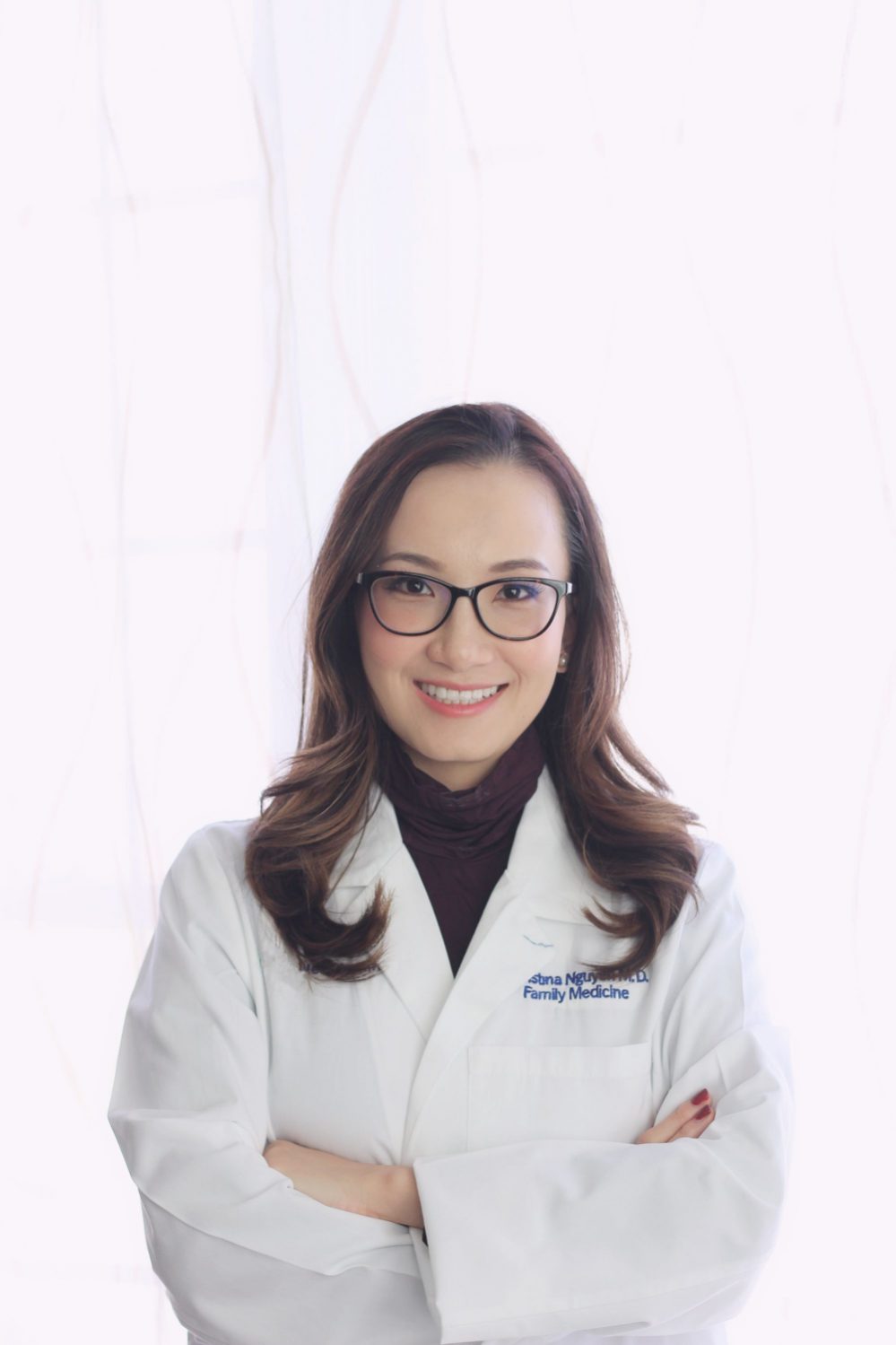
Years ago, when I sat down to write my application essay for the Bill Gates scholarship, I wrote about the dream of becoming a doctor who could help people across languages and cultures. That journey eventually led me to practice family medicine in the United States and to build The Phoenix Medical Academy — so students and immigrant families can find clearer guidance on studying medicine, residency, and life in America.