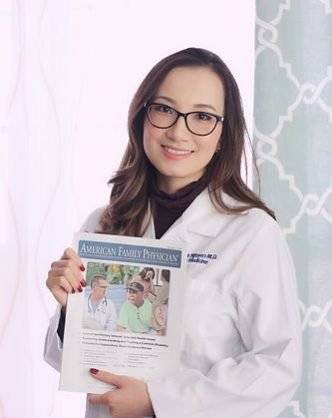
The other day, a friend asked me:
“Sister, I saw a doctor who did a residency in the US and then returned to Vietnam to work at a hospital in Ho Chi Minh City. So, after completing my residency in the US, will I be granted a green card to stay in the US?”
I think many of you have the same question, so I want to share some information so you can have a clearer view of this path.
>
In general, after completing a residency program in the US, international doctors have many opportunities to work and settle down. in the US, and the majority also choose to stay for many reasons.
To settle in the US and legally work as a doctor in the US, after graduating from the medical residency training program, you need a green card. The path to a green card will usually have the following stages.
Phase 1: Training resident doctors
During residency training in American Medicine, most physicians will have a J-1 visa.
This visa will be valid for the entire duration of residency training.
Stage 2: After graduating from American Medical residency
After graduating from a US Medical residency, this means your J-1 visa will no longer be valid, and you will have to fulfill a condition called Home Residency Requirement (HRR), which means that after completing the residency program, the doctor must return to his or her home country for at least 2 years before being able to return to the US to work.
However, you can apply for an exemption from this requirement by working at a US Government hospital or clinic, such as a Veterans Affairs hospital (VA Waiver), or working in a US physician shortage area for at least 3 years (Conrad 30 Waiver Program). After completing these 3 years, you don’t need to worry about the other condition anymore.
During this working period, the visa you usually have is an H1B visa, issued by a hospital or clinic guarantee. The H-1B visa allows you to stay in the US for 3 years, and can be extended for another 3 years, for a total maximum period of 6 years.
During the time you have the H-1B visa, you can begin the green card application process.
Stage 3: Apply for a green card
Once you have completed 3 years, you are no longer bound by the requirement to work in a shortage area. You can freely transfer to work at any medical facility in the US, as long as you maintain a valid visa status (H-1B visa) or are in the process of applying for a green card.
To apply for a green card, you can apply under EB-3 or EB-2.
A common way to apply for a green card is through the National Interest Waiver (NIW)
.
NIW is part of the EB-2 visa category but allows you to apply for a green card on your own without employer sponsorship, as long as you can demonstrate that your work is beneficial to the national interest. family.
For example, if you continue to work in physician shortage areas (HPSAs) or critical public health areas, you may qualify for NIW.
When you apply for a green card, your spouse and children under 21 can also apply for a green card at the same time. This helps ensure that your entire family can settle in the US.
What do you think about this path?
Please comment “yes” if this article is useful to you.
Related articles

SPENDING MONEY TO BUY A LOT OF EXPENSIVE STUDY MATERIALS THAT WILL NOT HELP YOU PASS USMLE STEP 1
27/07/2026

WHAT DO YOU NEED TO PREPARE IF YOU WANT TO BECOME A DOCTOR IN THE US?
26/12/2024

99% OF PEOPLE SKIP THIS AND REGRET IT LATER…
30/07/2026
U.S. MEDICAL RESIDENCY 2025 TIMELINE
16/11/2023

JOURNEY TO REALIZE THE DREAM OF BEING A DOCTOR IN THE US
21/04/2025