1.1 What are the advantages of this way of learning?
Learning these groups of words gives you 3 benefits compared to the traditional way of learning:
- Helps you have a basic concept of terminology.
- Can guess the meaning of a new word based on its components.
- Remember the meaning of the term longer.
For example, if you If you know that “Hyper” is higher than normal, then you can guess that the term “Hypertension” means “Higher than normal blood pressure.”
However, you should not just memorize them dryly.
Don’t sit around muttering that “Hyper” is higher than normal. Instead, learn with specific and interesting examples, like Hypertension, Hyper is higher than normal, hypertension is blood pressure is higher than normal.

I will consider Medical English as a tool to improve my medical professional knowledge, and focus on learning knowledge instead of learning terminology.
When you learn this way, you will have a deep understanding, long-term memory, and durable memory.
For example, when you learn thoroughly about the disease hypertension – from symptoms, complications, treatment, etc. then you will remember what hypertension is.
Not only will you remember the definition, but you will also be knowledgeable and up to date on the latest diagnosis and treatment recommendations of this disease, to become a better doctor.

So what sources should I learn specialized English from?
To start, I will get information from the sources that are easiest to understand and interesting to me.
For example, I am someone who likes to watch videos and illustrations, so I will start learning from the videos with illustrations on Youtube, and watch the video with subtitles for easier understanding.
When reading, I will read from books or websites written concisely, easily understood, and in common language.
After I get used to it, I will increase the difficulty, reading from specialized textbooks with few pictures and lots of text, or scientific magazines.
Because if you start learning right away from these sources, it will lead to boredom and giving up. Reading a sentence and looking up all 5-6 words in the dictionary is really difficult for beginners.
3. Use learned knowledge to serve the job
For example, for doctors who want to practice and work abroad, or in an environment where communicating in English with patients, practice explaining terms in the simplest way for the patient to understand.
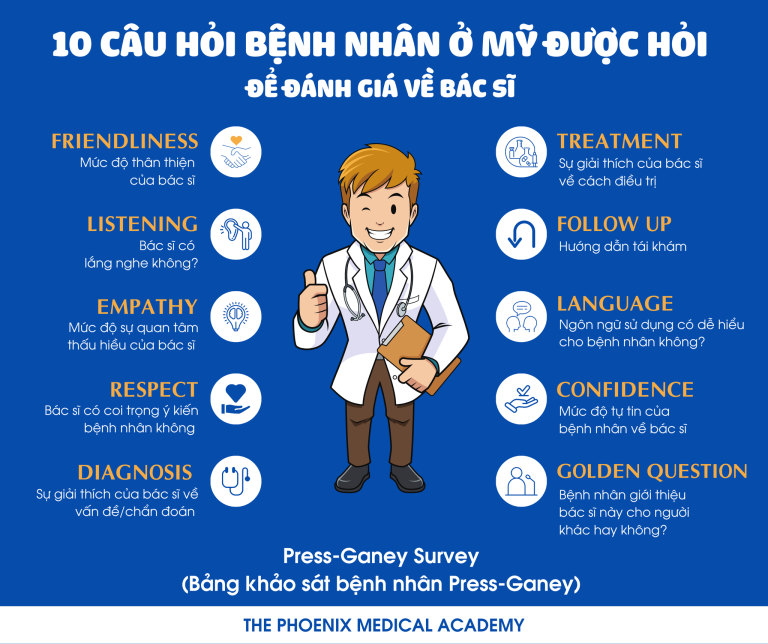
Simply, when working as a clinician, the patient’s most important concern is not how much the doctor understands, but how much the patient understands. much.

In short, the 3 things I will do are:
(1) Learn through word roots, prefixes, and suffixes as a basis.
(2) Find information in English about topics you are interested in.
(3) Find ways to practice immediately.
I will do these three things in parallel so that they support each other.
Wish you success in the process of learning English for the medical field.
Please comment “Yes” if this article is useful to you