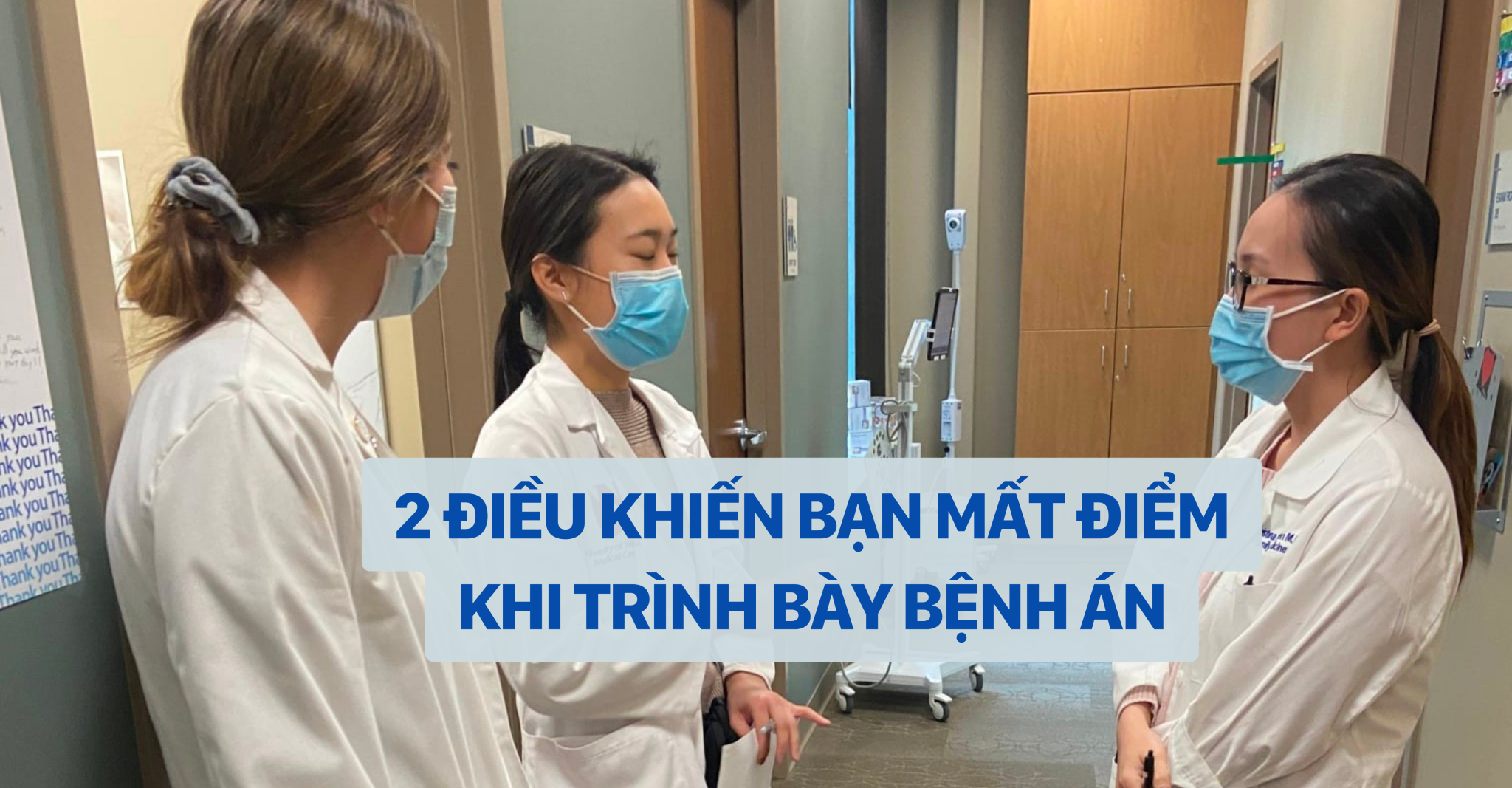
2 THINGS THAT MAKE YOU LOSE POINTS WHEN PRESENTING YOUR MEDICAL RECORDS

2 điều khiến bạn mất điểm khi trình bày bệnh án

2 THINGS WHEN YOU LOSE POINTS WHEN PRESENTING YOUR MEDICAL RECORDS

Every month, there are students and newly graduated doctors coming to practice at the clinic. I often have to spend a lot of time instructing them on how to present their medical records effectively.

In the process of working with them, I feel there are 2 mistakes they often make. Yes.

So today I want to share about this topic in the hope of helping students and young doctors during their clinical internship.

If you commit one or both of these mistakes, it’s possible that your clinical instructor will have a poor assessment of your thinking ability.

Even if you are a good student/doctor, work hard, but there is a saying that “Perception is reality” means “Perception is reality.”

If you are good but others cannot see your good things, then in their minds you are not good either

1. PRESENTING TOO MANY IRRELEVANT DETAILS

There is a mistake that young, inexperienced doctors often make, which is fear of presenting a lack of information, so they tell the teacher everything.

For a simple example, if you present about a patient who drank alcohol and fell and twisted his leg, you do not need to mention that the patient went out drinking with friends and ate 2 hot pots, 10 baluts, 5 of course, unless the patient has a twisted leg and also has diarrhea and abdominal pain.

In reality, teachers do not have the time or patience to listen to details unrelated to the patient’s current problem.

Usually, every time teachers listen to a medical history presentation, they will picture the patient in their minds and begin to form differential diagnoses right from the first information. first.

Therefore, if you draw a picture with too much Noise information, it will make the listener feel quite annoyed.

The teacher will have the feeling that you do not know how to filter information, do not know which information is important, which information is related to the heart of the problem.

I have witnessed this scene. The teacher seemed annoyed and kept asking the resident doctor to get the information they needed because he or she presented too ramblingly.

To have a correct understanding of how to effectively present a medical history, you can imagine it like this. As a future doctor, or currently a resident doctor, your task is to take a medical history and examine the patient to arrive at a diagnosis and treatment.

You must be a chef who does all the steps, from going to the market, buying food, processing it, cooking it, and presenting it for your teacher to enjoy and evaluate your work. The teacher may say that this is not enough, that needs to be supplemented, but they still feel that you have tried to fulfill the four parts of your job.

And when your presentation is rambling, the information lacks connection and relevance, it is like going to the market to buy a bunch of things and dumping them in the middle of the house for the teacher to prepare and cook for themselves.

Of course the teacher will be angry and have judgments. not very good about your thinking ability.

2. PRESENTATION IS LACK OF IMPORTANT INFORMATION

In addition to presenting redundant details, under-presenting important information is also a common problem for young doctors.

For example, a patient with a history of heart failure is admitted to the hospital because of chest pain and shortness of breath, but the presentation omits information about heart failure. When was the last time you did ECHO? What was the result? LVEF how much?

In addition to the important information that can be found in the patient’s old records, there is also important information from the patient’s own records.

For example, the patient has back pain with a herniated disc, but refuses to do physical therapy.

If you just stop there in the presentation, it’s not enough. enough.

What you need to explore and find out is REASON why the patient does not want to be treated with physical therapy. It could be because there is no money, no time, the patient wants to practice at home first, or go to acupuncture, etc.

Why do you have to dig so deeply?

Because your teacher will definitely ask “Why doesn’t the patient accept? What kind of treatment does the patient want?” And if you don’t know how to say “I don’t know” then you’ve lost points.

And the reality is that it’s not that the teacher is difficult, but if the doctor does not understand the patient’s worries, wishes, and aspirations, it is difficult to provide appropriate treatment for the patient.

You may be wondering, so how to determine which information is important and which information is not important?

The simplest thing is is that you need to put yourself in the teacher’s position.

“ In order for the teacher to be able to make an effective diagnosis and treatment, what do they need to know? go?”

For example, a male patient with abdominal pain and vomiting after returning from drinking will have a different differential diagnosis than a female patient who feels nauseous and has missed her period this month.

Or if your patient has obtained information that the patient has tried and had success with 3 types of high blood pressure medications, and now does not want to try any more, then when your doctor/teacher walks in There will be a suitable treatment/persuasion plan.

It’s not “falling flat” when giving advice “You should use this type”, but the patient says “I don’t want it.”

A sentence that my senior taught me “Do what makes your teacher less tired, then you will be less tired in the future too.” tired.”

Please comment “yes” if this article is useful to you.

If you want to subscribe to the email list to receive useful documents from me in the future, please fill out the registration form below the blog.

Dr. Christina Nguyen
The Phoenix Medical Academy

If you found this article meaningful, please share it with others!

2 điều khiến bạn mất điểm khi trình bày bệnh án

2 THINGS WHEN YOU LOSE POINTS WHEN PRESENTING YOUR MEDICAL RECORDS

Every month, there are students and newly graduated doctors coming to practice at the clinic. I often have to spend a lot of time instructing them on how to present their medical records effectively.

In the process of working with them, I feel there are 2 mistakes they often make. Yes.

So today I want to share about this topic in the hope of helping students and young doctors during their clinical internship.

If you commit one or both of these mistakes, it’s possible that your clinical instructor will have a poor assessment of your thinking ability.

Even if you are a good student/doctor, work hard, but there is a saying that “Perception is reality” means “Perception is reality.”

If you are good but others cannot see your good things, then in their minds you are not good either

1. PRESENTING TOO MANY IRRELEVANT DETAILS

There is a mistake that young, inexperienced doctors often make, which is fear of presenting a lack of information, so they tell the teacher everything.

For a simple example, if you present about a patient who drank alcohol and fell and twisted his leg, you do not need to mention that the patient went out drinking with friends and ate 2 hot pots, 10 baluts, 5 of course, unless the patient has a twisted leg and also has diarrhea and abdominal pain.

In reality, teachers do not have the time or patience to listen to details unrelated to the patient’s current problem.

Usually, every time teachers listen to a medical history presentation, they will picture the patient in their minds and begin to form differential diagnoses right from the first information. first.

Therefore, if you draw a picture with too much Noise information, it will make the listener feel quite annoyed.

The teacher will have the feeling that you do not know how to filter information, do not know which information is important, which information is related to the heart of the problem.

I have witnessed this scene. The teacher seemed annoyed and kept asking the resident doctor to get the information they needed because he or she presented too ramblingly.

To have a correct understanding of how to effectively present a medical history, you can imagine it like this. As a future doctor, or currently a resident doctor, your task is to take a medical history and examine the patient to arrive at a diagnosis and treatment.

You must be a chef who does all the steps, from going to the market, buying food, processing it, cooking it, and presenting it for your teacher to enjoy and evaluate your work. The teacher may say that this is not enough, that needs to be supplemented, but they still feel that you have tried to fulfill the four parts of your job.

And when your presentation is rambling, the information lacks connection and relevance, it is like going to the market to buy a bunch of things and dumping them in the middle of the house for the teacher to prepare and cook for themselves.

Of course the teacher will be angry and have judgments. not very good about your thinking ability.

2. PRESENTATION IS LACK OF IMPORTANT INFORMATION

In addition to presenting redundant details, under-presenting important information is also a common problem for young doctors.

For example, a patient with a history of heart failure is admitted to the hospital because of chest pain and shortness of breath, but the presentation omits information about heart failure. When was the last time you did ECHO? What was the result? LVEF how much?

In addition to the important information that can be found in the patient’s old records, there is also important information from the patient’s own records.

For example, the patient has back pain with a herniated disc, but refuses to do physical therapy.

If you just stop there in the presentation, it’s not enough. enough.

What you need to explore and find out is REASON why the patient does not want to be treated with physical therapy. It could be because there is no money, no time, the patient wants to practice at home first, or go to acupuncture, etc.

Why do you have to dig so deeply?

Because your teacher will definitely ask “Why doesn’t the patient accept? What kind of treatment does the patient want?” And if you don’t know how to say “I don’t know” then you’ve lost points.

And the reality is that it’s not that the teacher is difficult, but if the doctor does not understand the patient’s worries, wishes, and aspirations, it is difficult to provide appropriate treatment for the patient.

You may be wondering, so how to determine which information is important and which information is not important?

The simplest thing is is that you need to put yourself in the teacher’s position.

“ In order for the teacher to be able to make an effective diagnosis and treatment, what do they need to know? go?”

For example, a male patient with abdominal pain and vomiting after returning from drinking will have a different differential diagnosis than a female patient who feels nauseous and has missed her period this month.

Or if your patient has obtained information that the patient has tried and had success with 3 types of high blood pressure medications, and now does not want to try any more, then when your doctor/teacher walks in There will be a suitable treatment/persuasion plan.

It’s not “falling flat” when giving advice “You should use this type”, but the patient says “I don’t want it.”

A sentence that my senior taught me “Do what makes your teacher less tired, then you will be less tired in the future too.” tired.”

Please comment “yes” if this article is useful to you.

If you want to subscribe to the email list to receive useful documents from me in the future, please fill out the registration form below the blog.

Dr. Christina Nguyen
The Phoenix Medical Academy

If you found this article meaningful, please share it with others!

BECOME A DOCTOR IN THE U.S.

Would you like to learn how to communicate with patients in English to U.S. medical standards, explore the mindset and skills needed to succeed in medicine in America, or learn more about life as a doctor in the U.S.?

BECOME A DOCTOR IN THE U.S.

Would you like to learn how to communicate with patients in English to U.S. medical standards, explore the mindset and skills needed to succeed in medicine in America, or learn more about life as a doctor in the U.S.?

If you found this article helpful, please share it with others!

Leave a Reply

 Dr. Christina Nguyen
Family Doctor in the U.S.

Years ago, when I sat down to write my application essay for the Bill Gates scholarship, I wrote about the dream of becoming a doctor who could help people across languages and cultures. That journey eventually led me to practice family medicine in the United States and to build The Phoenix Medical Academy — so students and immigrant families can find clearer guidance on studying medicine, residency, and life in America.

Get new posts by email